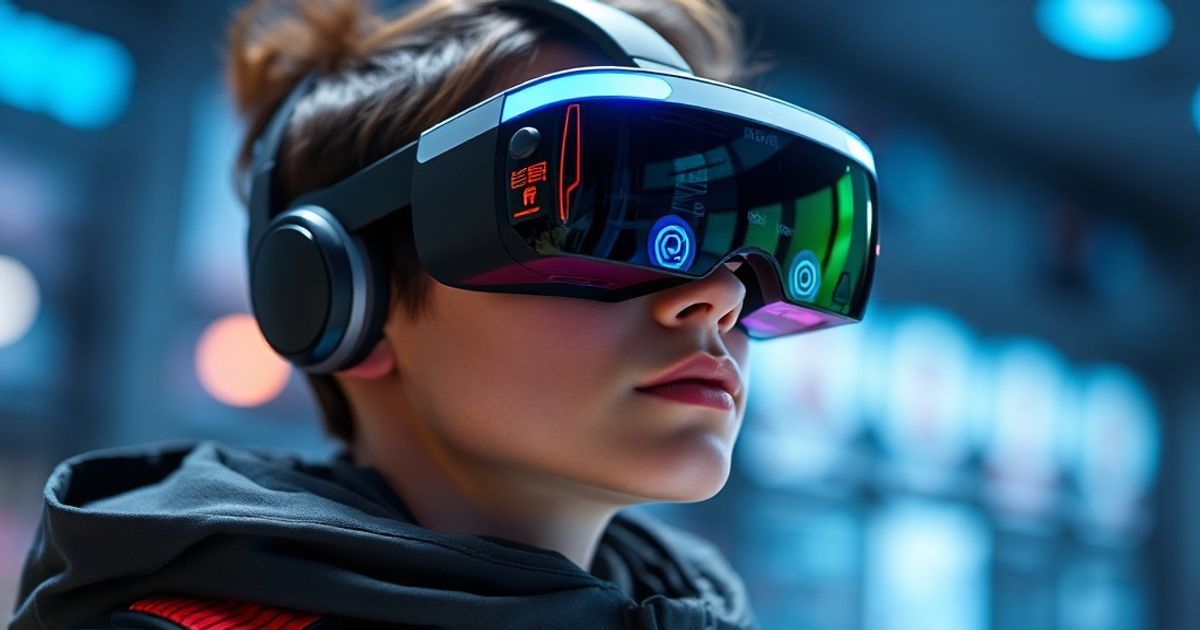
The Headset Dream Is Over (And That's Good News)
For years, we've been told the future of computing is a high-end headset strapped to your face. Apple bet the farm on it with Vision Pro. Meta built an entire division around it. But in early 2026, the market has delivered a quiet, unmistakable message: the real future is lighter, simpler, and looks like regular glasses.
IDC forecasts global XR device shipments will grow 33.5% in 2026, with the vast majority of growth coming from smart glasses without displays. That's not a niche. That's a fundamental platform shift.
The Strategic Collapse Everyone Missed
Let's start with the elephant: Meta, the company that spent the last five years and billions in R&D to dominate spatial computing, is stepping back. In late 2025, internal memos revealed that Meta had delayed its high-end mixed reality glasses, codenamed Project Phoenix, from a late 2026 launch to the first half of 2027, driven by a combination of budget constraints and a strategic shift toward profitability.
This isn't a delay. It's a surrender of timing at the worst possible moment—right when competitors are launching. Meta's Reality Labs division reportedly faced cuts as CEO Mark Zuckerberg personally intervened to prioritize sustainable business models over rapid hardware iteration.
But here's what's actually happening while Meta recalibrates: the real action is moving elsewhere. Despite the Phoenix delay, Meta is not sitting still in 2026. The company is doubling production of its Ray-Ban smart glasses to meet the sizzling demand for AI-powered eyewear. The irony is magnificent. Meta's most successful XR product isn't a headset—it's a pair of glasses that doesn't replace your vision. It augments it.
Android XR Changes Everything
Google finally revealed and launched Android XR, a direct competitor to Apple's VisionOS. Samsung launched the first Android XR headset, Galaxy XR, a direct competitor to Apple's Vision Pro. But the real threat to both Apple and Meta isn't another closed ecosystem. It's the decision to make XR open.
Project Aura is a new AR headset from XREAL built in partnership with Google. It is the first Android XR "glasses" (a wired AR display) that Google has previewed. Xreal Project Aura is going to totally revolutionize XR headsets as we know them when it launches in 2026. We don't have a price or a specific release date yet, but it's pretty confident they'll launch at a lower price than Samsung's Galaxy XR.
Analysts project Samsung's Galaxy XR to achieve over a hundred thousand unit sales in 2026, while at least five Android XR devices are expected to launch, including flat-AR display glasses from Samsung and Xreal, plus non-display AI glasses from Warby Parker and Gentle Monster. That's ecosystem velocity. That's competition at scale.
The Numbers That Matter
The market is expanding fast, but not where the headlines go. The mixed reality market is expected to grow from USD 5.87 billion in 2025 to USD 8.41 billion in 2026. Meanwhile, the Virtual Augmented And Mixed Reality Market was valued at USD 20.43 billion in 2025 and estimated to grow from USD 26.9 billion in 2026 to reach USD 106.42 billion by 2031, at a CAGR of 31.67% during the forecast period.
But device-level, the story is stark. Despite its overall leadership, Meta's Quest VR headset shipments declined 42.3% year over year, reflecting early-year supply chain challenges and waning demand outside core gaming audiences. The gaming headset era isn't mature—it's contracting.
Growth was driven primarily by the rapid expansion of smart glasses, while shipments of traditional virtual reality (VR) and mixed reality (MR) headsets continued to decline. Smart glasses from vendors such as Meta, Xiaomi, and emerging display-glasses specialists moved XR closer to everyday wearables and away from bulky, gaming-centric hardware. Products like Ray-Ban Meta AI glasses, alongside a growing number of competing designs, helped redefine consumer expectations for XR as lightweight, always-on, and increasingly AI‑first.
Why Lightweight Wins
The form factor shift isn't accidental. The clunky, front-heavy "face computer" design will become a relic of the past. The new generation of devices will prioritize comfort and social acceptability. Inspired by the design of standard eyeglasses and sunglasses, these devices will be lightweight, balanced, and aesthetically pleasing.
Models like RayNeo's X3 Pro weigh under 80g, while ASUS's R1 and Valve's Steam Frame shift heavier components to the rear for better balance and reduced front weight. When a device weighs less than your sunglasses, the use case changes. You stop thinking about "VR sessions" and start thinking about all-day wear.
Enterprise Is Quietly Winning
While consumer attention focuses on gaming and gaming, enterprise is moving fast and silent. Market data indicates that the industrial segment alone is expected to account for a substantial share of the market, with projections suggesting it could reach over 40% by 2026.
Enterprise projects now document training cost reductions of as much as 90% versus legacy classroom methods. That's not aspirational. That's real ROI. That's adoption drivers.
The shift happening towards 2026 feels different from the headset hype cycles of the past. It's quieter, more practical, and happening inside the enterprise first. Companies aren't chasing "wow moments" anymore. They're after measurable outcomes: fewer travel costs, better remote collaboration, shorter training curves.
What This Means for Developers (and Your Wallet)
If you're building XR software in 2026, the landscape is fragmented but clearer. The industry is converging on MR as the standard, with pure VR and pure AR as modes within it. Meta Quest 3's color passthrough turned it into the first affordable MR device. Apple Vision Pro made MR the default interaction mode — apps float in your real room by default.
But the real development momentum is on Android XR. AI is now central to XR, with headsets and glasses integrating always-on assistants powered by generative models. Google's Android XR platform uses Gemini to deliver real-time, context-aware responses to visual and voice input. On-device sensors handle simple tasks locally for speed and privacy, while complex queries use cloud AI.
If you're a consumer waiting to buy, this is the right year. The company disclosed during its quarterly developer call on March 24 that the Quest 3S has now sold over 12 million units worldwide since its October 2024 launch. The $299 price point continues to be Meta's strongest competitive lever: IDC analyst Francisco Jeronimo estimated on March 26 that the Quest 3S outsold all other standalone headsets combined during Q1 2026 by a factor of roughly nine to one.
But if you're thinking about a second device, or evaluating what XR really means for your workflow, the answer is increasingly: lightweight glasses that run AI natively, integrate with your phone, and don't announce themselves in public.
The Real Turning Point
2026 isn't the year VR "went mainstream." It's the year the industry finally admitted what consumer behavior has been screaming for two years: the future isn't a headset replacing your vision. It's a pair of glasses augmenting it, powered by AI, priced under $500, and light enough to forget you're wearing.
Meta saw it coming and abandoned Project Phoenix. Apple is still betting the farm on premium spatial computers. Google is building the platform everyone will eventually run on.
The winner? Not a company. A form factor. And the fact that it looks like regular glasses—not a sci-fi helmet—is exactly why it wins.