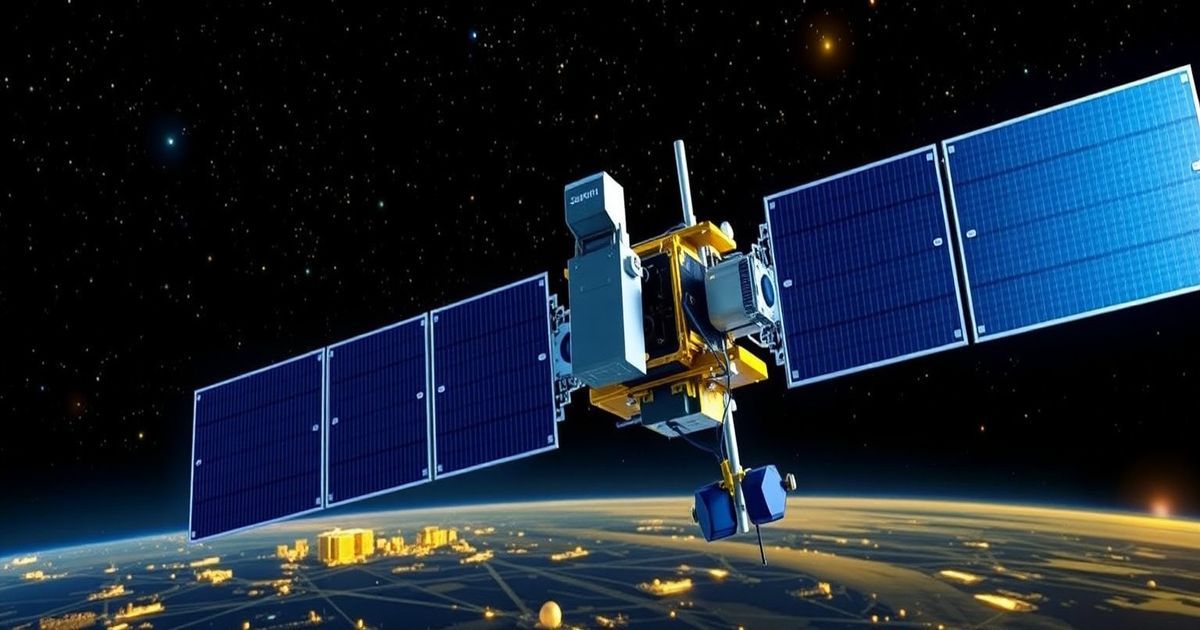
The satellite broadband story just shifted. For over a year, Starlink's Direct-to-Cell service—marketed as T-Satellite through T-Mobile—was positioning itself as a safety net: texts and basic apps when terrestrial towers couldn't reach you. Useful, but not transformative.
That narrative changed in February 2026.
The 150 Mbps Announcement
During the International Telecommunication Union (ITU) Space Connect conference in February, SpaceX satellite policy lead Udrivolf Pica announced the company is targeting peak download speeds of 150 Mbps per user for its next-generation Direct-to-Cell (D2C) Starlink service. To appreciate the magnitude: SpaceX's current cellular Starlink service, offered in partnership with T-Mobile under the T-Satellite brand, provides speeds of roughly 4 Mbps per user and is designed primarily for texts, low-resolution video calls, and select apps in locations that traditionally have no cellular service.
That's a 37-fold improvement from today's baseline—and it positions satellite-to-phone broadband as something terrestrial carriers cannot ignore.
Why This Matters More Than Raw Speed
SpaceX entered into a $17 billion agreement with EchoStar to acquire AWS-4 and H-Block licenses, granting the company 50 MHz of dedicated mid-band capacity. As one SpaceX executive summarized: "More spectrum means a bigger pipeline, and this means that we can expand what we can do with partners. We can expand the quality of service."
For industries already deploying cellular routers in the field, Starlink Mobile could eventually become another viable WAN option — either as a primary link or an automatic failover path alongside existing carriers. The shift is from niche emergency tool to legitimate infrastructure alternative.
But there's a timeline reality. SpaceX aims to provide much faster 150 megabits per second speeds with its next-generation constellation, about 1,200 of which the company aims to launch in 2027. That constellation won't be fully operational until 2027 or 2028. For now, Starlink Direct to Cell is the largest 4G coverage provider on Earth, with more than 12 million people already relying on Starlink to connect their LTE phones in areas where terrestrial service is unavailable.
The Amazon Leo Wildcard
While SpaceX plots its D2C evolution, Amazon is moving faster with fixed broadband. Amazon Leo has launched two prototype satellites and 212 production satellites to date as of December 2025. Amazon has projected that Leo is on track to begin servicing five countries, including the U.S., starting Q1 of 2026.
At the end of January 2026, the FCC approved a request by Amazon Leo to launch 4,500 additional LEO satellites, boosting the total planned to 7,727. This is the aggressive play: Amazon is not waiting for perfection. Amazon began an enterprise preview in November 2025 to allow select business customers to begin testing the network using production hardware and software, and will roll out Amazon Leo service more widely in 2026 as it launches more satellites and adds coverage and capacity to the network.
The bet is clear—get market share before Starlink's next-gen D2C arrives.
The Broader Shift: Competition Transforming the Market
What's remarkable is how quickly the landscape is consolidating. Legacy satellite internet provider HughesNet appears to be throwing in the towel, planning to refer new and existing customers to Starlink. SpaceX's Starlink continues to dominate satellite internet, but as competition looms, SpaceX has become surprisingly aggressive with price cuts and promotions.
In March 2026, Starlink is offering a 100 Mbps residential broadband Internet plan for as low as $39 a month for six months in a new promotion. That's not a coincidence—it's defensive pricing in response to Amazon Leo's launch window.
Meanwhile, the service currently reaches roughly 10 million active users per month through partner carriers, and SpaceX is targeting more than 25 million by the end of 2026. That target assumes carrier partnerships will generate bulk adoption, not individual sign-ups.
What's Next: The Real Test
150 Mbps would make satellite-to-phone broadband competitive in remote and rural areas, but terrestrial 5G networks in urban and suburban markets will continue to deliver faster median speeds for the foreseeable future. SpaceX is not claiming to replace T-Mobile or Verizon. What it is claiming: a credible backup link and a primary option where fiber and fixed wireless don't exist.
Amazon Leo faces a different test—executing at scale without the manufacturing and launch pedigree SpaceX has built over a decade. Project Kuiper's satellite internet service has no official launch date but should be at least partially operational by 2027. That's Amazon's window: prove beta service works in Q1 2026, then expand capacity faster than Starlink can deploy next-gen satellites.
For remote workers, RV dwellers, maritime operators, and enterprises in coverage gaps, 2026 is the inflection year. Not because one service wins—but because, for the first time, there are genuine alternatives with real speeds and real momentum behind them.