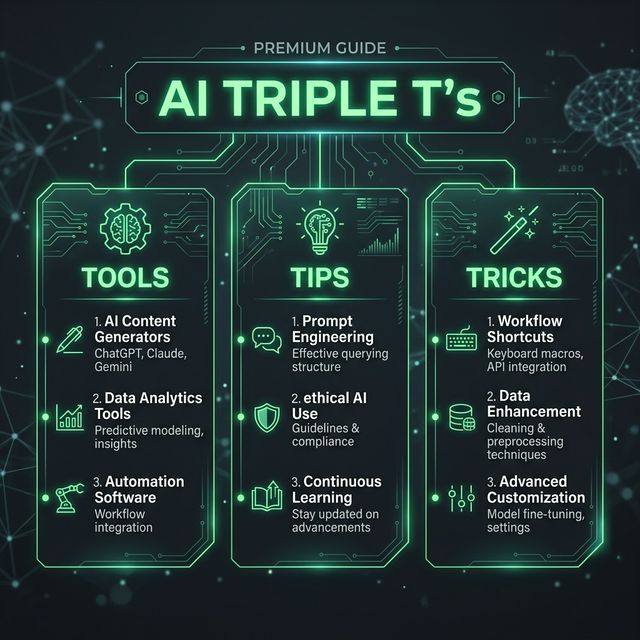
AI Triple T's: Mastering Language Learning and Translation Tools in 2026
The Landscape Shift: AI Has Changed the Game
Language learning and translation have fundamentally transformed. With Gemini models in Translate, we've taken huge strides in translation quality, multimodal translation, and text-to-speech capabilities, and in 2026, AI tutors hold full conversations in 9+ languages, adapt to your proficiency level in real time, correct your pronunciation, and cost less per month than a single hour with a human tutor.
What's different now? The "chatbot" era has officially ended. Static apps and basic GPT-wrappers have been replaced by Agentic AI—tutors that don't just chat, but actually teach, remember your mistakes, and adapt their pedagogy in real-time.
Let's cut through the noise and explore the tools actually delivering results.
The Tools (5 Essentials)
1. Google Translate + Live Conversation Mode
Value Proposition: Real-time speech translation for 70+ languages; no setup required.
Google Translate now uses AI to translate live conversations in real time. The Translate app lets you have back-and-forth conversations in over 70 languages with audio and on-screen translations. Translate smoothly switches between the two languages you and your language partner are speaking, intelligently identifying conversational pauses, accents and intonations.
Unique Edge: Built-in language practice. Translate has a new language practice feature that creates tailored listening and speaking sessions to help you meet your learning goals. Free, ubiquitous, and works offline for camera translation.
Best for: Travel, real-time meetings, beginners who need immediate practical translation.
2. DeepL Pro
Value Proposition: Context-aware translation with neural networks; exceptional accuracy for nuanced text.
DeepL uses neural networks to understand context and generate translations. In simpler words, these are computer systems designed to replicate human brain activity. DeepL utilizes artificial neural networks for translation, which can handle longer sentences and paragraphs without altering the original meaning. It provides various features such as language auto-detection, text-to-speech support, and alternative translations for word or phrase substitution.
Unique Edge: DeepL stands out for its ability to switch between formal and informal tones, making it a considerable option for different contexts and needs. DeepL's translator covers 100+ languages and works on PDF, MS Word, and MS Powerpoint files. With the free version, there is a limit of only one file per month. DeepL can support industry-specific translations, for example, life sciences and manufacturing.
Best for: Professional documents, legal content, business communication where tone matters.
3. Langua (AI Conversation Partner)
Value Proposition: Most realistic AI conversation experience; human-like voices and intelligent feedback loops.
Langua is the most realistic AI app for language learning. For most languages, you can choose your preferred dialect. Multiple ways to get feedback - written corrections with explanations, verbal corrections directly from the AI in its replies, and a detailed feedback report following your conversation.
Unique Edge: The AI will intelligently incorporate your saved words into the conversation. Speak in your language when you're stuck - Langua's technology will usually be able to understand. This means beginners feel supported, not judged.
Best for: Learners at all levels who want judgment-free speaking practice with detailed feedback.
4. Duolingo Max (with AI Features)
Value Proposition: Gamified learning with sophisticated AI explanation and roleplay; proven engagement track record.
In 2026, Duolingo remains the king of consistency. While its core is still gamified drills, the "Max" tier has integrated sophisticated AI explanation and roleplay features. Explain My Answer: AI-driven breakdowns of why your specific answer was wrong, tailored to your native language. Roleplay Mode: Chat with the app's famous characters in pre-set scenarios to earn XP. Video Call Simulations: Short, low-pressure video interactions with AI characters.
Unique Edge: Max AI features currently limited to ~6 languages (Spanish, French, German, Italian, Portuguese, Japanese)—but if your target language is supported, the integration between structured lessons and roleplay is unmatched.
Best for: Casual learners who want structure plus conversation practice without leaving a familiar app.
5. MachineTranslation.com (Multi-Model Ensemble)
Value Proposition: Compares 22 AI models and shows you the consensus best translation.
MachineTranslation.com compares the outputs of 22 AI models and selects the translation that most of them agree on. Compares outputs from 22 AI models and highlights the strongest translation based on cross-model agreement. MachineTranslation.com uses multiple leading AI sources such as Google, DeepL, Gemini, Claude, and Microsoft to generate translations. It then compares their outputs side by side, rates their quality, and highlights terminology differences. This approach helps users identify the most accurate and context-appropriate translation for their needs.
Unique Edge: See competing translations instantly. Supports 330+ languages and file types like PDF, DOCX, CSV, and JPG. Free to use; no signup required.
Best for: High-stakes translations where accuracy matters; professionals who want to compare models before deciding.
Pro Tips & Tricks (The Difference Between Good and Great)
Tip #1: Stack Tools by Weakness, Not Strength
Using one tool for everything — Duolingo for structured learning + Speak for conversation + ELSA for pronunciation is more effective than any single tool. Don't expect one app to excel everywhere. Use Google Translate for live speech, Langua for conversation practice, and Duolingo Max for grammar foundations. Each tool does specific things well.
Why it works: Different AI models have different strengths. Combining them covers your blind spots and accelerates learning faster than mastering one tool alone.
Tip #2: Respect the Spaced Repetition Rule
5 minutes of AI conversation daily beats 1 hour weekly — language learning depends on consistency and spaced repetition. Daily speaking practice builds neural pathways faster. Consistency beats intensity. Twenty minutes every single day outperforms weekend marathons.
Why it works: Your brain needs repeated exposure to encode language patterns into long-term memory. Daily micro-sessions activate spaced repetition naturally.
Tip #3: Don't Self-Correct During Conversations (Let Flow Win)
Don't self-correct during AI conversations — let yourself make mistakes and keep going. Fluency comes from flow, accuracy comes from review. Prioritize flow first. Many learners pause mid-sentence to correct themselves. Don't. Let the AI catch errors; you review afterward.
Why it works: Interrupting yourself breaks the neural pathway formation. Let the conversation flow naturally, then learn from the feedback.
Two Actionable Use Cases (Try These Today)
Use Case #1: The Traveling Professional
Goal: Navigate a business meeting in Spanish (B1 level) without breaking down.
Your Stack:
- Before the meeting (1 week): Use Duolingo Max roleplay scenarios for "business negotiation" and "presenting quarterly results" in Spanish. 15 minutes daily.
- 3 days before: Use Langua for 20 minutes to practice the specific terminology for your industry and region (Mexican Spanish vs. Spain Spanish). Save key terms.
- Day of meeting: Have Google Translate open on your phone for live translation if a critical moment requires backup. Use the camera feature to translate slides if needed.
- After the meeting: Record yourself speaking about what happened. Use ELSA (pronunciation tool) to check intonation.
Expected outcome: You'll handle 70-80% of the meeting confidently, use translation as a safety net only, and build vocabulary specific to your field.
Use Case #2: The Academic Researcher
Goal: Read 3 papers in French, extract key findings, and understand methodology without hiring a translator.
Your Stack:
- Paper 1 (skimming): Copy the abstract and introduction into DeepL Pro. Select "formal tone." Read the DeepL translation alongside the original French using Immersive Translate (bilingual side-by-side view).
- Paper 2 (deep read): Use MachineTranslation.com to upload the PDF. Compare translations from DeepL, Google, and Claude. For dense methodology sections, use the best performing model.
- Paper 3 (terminology lock-in): Upload a glossary of your field's technical terms to DeepL Pro. This ensures consistent terminology across all three papers.
- Final synthesis: Spend 30 minutes with Langua discussing your findings in French. This forces you to articulate understanding and identify gaps.
Expected outcome: You'll understand 90%+ of the papers without outsourcing translation. You'll identify terminology nuances humans miss. You'll speak about your research in your target language—a major career boost.
The Truth About AI + Human Hybrid Learning
For anyone learning a language in 2026, AI tools represent a significant advantage—but only if used strategically. The most successful learners are those who view AI as one tool among many, rather than a silver bullet. Think of AI language tutors as supplementary practice partners that fill the gaps between formal lessons, textbook study, and real conversations with native speakers. They're available anytime, infinitely patient, and can provide instant feedback—but they work best when combined with the structure of traditional language learning apps and the authenticity of human interaction.
AI translation tools are not replacing human translators, but they are changing the workflow. In 2026, AI is commonly used for first-pass translations, while humans handle post-editing, quality assurance, and high-risk content.
The winning formula: AI for volume, humans for judgment. AI for practice, humans for accountability. AI for speed, humans for nuance.
Final Word
The gap between a "decent" language learner and a fluent one isn't intelligence or time—it's strategy. In 2026, your strategy is built on which AI tools you stack and how you use them.
Start with one of the five tools above. Pick a specific goal (travel, work, research, fluency). Commit to the spaced repetition rule. Let AI do what it does best—infinite patience and instant feedback—while you focus on what humans do best: setting ambitious goals and maintaining discipline.
The language you want to speak is waiting. The tools are ready. Your move.