The Reality Check First
By 2026, 86% of creators report using AI daily—and this rapid adoption has fundamentally reshaped creative workflows. But here's what most guides won't tell you: the trick is to treat AI as a sidekick, not the hero, because maintaining this balance ensures designs stay human, not just clever or efficient.
Five Tools That Actually Deliver
1. Midjourney v8: For Aesthetic Direction & Concepts
Midjourney has built its reputation on making images that look good, with new models producing results with a distinct artistic sensibility that other generators struggle to match, particularly for stylized, editorial, and conceptual imagery. It's most often used during early concepting, when teams are exploring visual direction, mood, or style.
Unique Strength: Its community knowledge base allows users to experiment with styles, themes, and moods through detailed prompting techniques.
Pricing Reality: Basic Plan starts at $10/month with ~200 images, and you get the option to buy additional GPU time with commercial usage rights.
2. Adobe Firefly: For Production & Legal Safety
Adobe trained Firefly exclusively on Adobe Stock, openly licensed content, and public domain material, giving it a commercial safety advantage that matters for agencies, brands, and any work where IP disputes would be catastrophic. Surveys in 2026 show that businesses using Firefly reduce design compliance risks by over 60%.
Unique Strength: Firefly's integration with Photoshop, Illustrator, and Express means AI generation happens inside your existing workflow.
Use Case Sweet Spot: Enterprise teams and regulated industries where IP clarity is non-negotiable.
3. Ideogram: For Text-Heavy Designs
Ideogram stands out for typography accuracy—while many AI tools struggle with readable text, Ideogram delivers industry-leading text rendering within complex compositions, excelling at posters, branding mockups, and marketing creatives where text clarity matters.
Unique Strength: Nothing beats Ideogram for text-heavy visuals—think posters, ad creatives, thumbnails, and branded graphic outputs. This unique capability gives it a distinct role compared to broader image generators.
Real Scenario: You need social media graphics with bold headlines. Ideogram renders legible text where DALL-E would fail.
4. Canva Magic Studio: For Speed & Brand Consistency
Canva Magic Studio is a text prompt-based AI design generator ideal for brand visuals, social ads, and videos, with the ability to preview instant design variations giving non-designers autonomy while still delivering professional-looking results.
Unique Strength: Users can upload logos, preferred color palettes, and font pairings to build brand kits that automatically apply to generated content.
Killer Feature: Canva's image generation moved from a simple plug-in to a core design engine using a hybrid architecture, joining Canva's proprietary models with integrated Leonardo.ai technology while promising professional control within a user-friendly interface.
5. Recraft: For Vector Graphics & Scalability
Recraft stands out for its focus on vector-based AI generation, producing scalable, editable graphics such as icons, illustrations and abstract motifs, which can be useful for designers who require flexibility across print and digital applications.
Unique Strength: Native SVG output means you get production-ready vectors, not rasterized images that break when you scale them.
Best For: Logo designers, icon systems, and anyone who needs assets that scale from favicon to billboard.
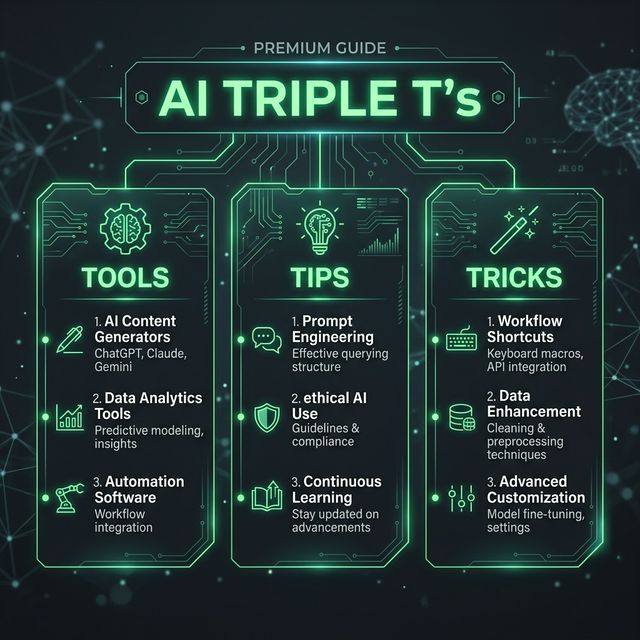
Three Pro Tips That Actually Work
Tip #1: Break Down Complex Prompts Into Modular Chunks
Moonchild AI performs best when you give it structure—not everything at once. Breaking the flow into smaller chunks gives far more control. Same logic applies everywhere: instead of "Design my entire SaaS dashboard," prompt for one section at a time (header, then filters, then results table). You'll get better hierarchy, clearer intent, and less generic output.
Specific Tactic: Create a 3-screen sequence: login → dashboard → settings. Run each separately. This prevents AI from averaging everything into visual mush.
Tip #2: Use Brand Kits as Your Silent Guardrail
Users can upload logos, preferred color palettes, and font pairings to build brand kits that automatically apply to generated content, making it easy for marketing teams running multiple campaigns to keep social posts and ads cohesive across channels.
Specific Tactic: Before generating anything, build your brand kit once (in Canva, Figma, or your tool). Every subsequent generation inherits your palette, fonts, and tone automatically. This isn't extra work—it prevents rework.
Tip #3: Treat Generative Fill as Your Secret Composition Tool
Use Firefly's Generative Fill to remove backgrounds or expand compositions for social media visuals in seconds. Beyond cleanup, use it for composition: generate a base image, then expand it horizontally or vertically to fit different aspect ratios (16:9, 1:1, 4:5). The ability to resize assets for different formats without cropping key details is valuable for rapid iteration across platforms.
Specific Tactic: Create 1:1 Instagram asset → expand to 16:9 for LinkedIn → expand to 4:5 for Stories. One generation, three platform-ready assets. 10 minutes instead of 3 hours.
Two Use Cases You Can Test Today
Use Case #1: Social Media Ad Variation Testing (30 minutes)
The Problem: You have one ad creative. Facebook's pixel demands you test 10 variations. Hiring a designer = $500+. Doing it manually = 4 hours of tedium.
Your Workflow:
- Take your best-performing ad creative → open Figma or Canva
- Use Midjourney or Ideogram to generate 9 variations with different compositions (same text, different visual direction)
- Keep your headline, CTA, and brand elements identical. Only swap background/imagery
- Export all 10 → upload to Meta Ads Manager → split test
Result: What once took 3-4 hours to wireframe now happens in minutes—AI tools are eliminating the grunt work that kept talented professionals stuck pushing pixels instead of solving actual user problems. You now test 10 ad variations in the time you'd have spent on 1-2 manually.
Tool: Ideogram (for text accuracy in headers) + Canva (for rapid layout assembly)
Use Case #2: Brand Mood Board → Design System (45 minutes)
The Problem: You're onboarding a new brand. Stakeholders can't articulate what they want, but they know it when they see it. Traditional moodboarding = hours of Pinterest scrolling.
Your Workflow:
- Open Khroma → train it with 5-10 colors your client showed you
- Generate 20 palette variations → pick 5 directions
- Run each palette through Figma AI or Stitch to generate UI mockups using identical copy/structure, different aesthetics
- Show stakeholders 5 directional versions → they pick 1-2 → you have a visual system and design direction locked in 30 minutes
Result: By training the system on preferred colours, designers can generate palette combinations, gradients and pairings aligned with a particular aesthetic direction, and it's commonly used as a discovery tool during branding or visual identity exploration. No more "I'll know it when I see it" stalling your project.
Tools: Khroma (palette generation) + Stitch or Figma AI (system mockup)
The One Thing No One Talks About
Roughly 70% of graphic designers use AI tools on a monthly basis, but the true worth of AI is not to replace the designer. Instead, AI excels as an assistant, providing inspiration, efficiency gains, and gap-filling. The productivity gap between teams using AI and those wireframing manually will only widen—designers who master these tools ship features 40-60% faster.
The advantage isn't having better ideas. It's having more time to validate ideas, test variations, and actually ship.
Where to Start
Start with the free tiers (most tools offer them), test two or three that match your workflow, and commit to the one that produces results you can actually use in production, not just results that look impressive in a prompt gallery.
- For concept work: Midjourney (start free trial if available, then $10/month)
- For production speed: Canva Magic Studio (free tier covers basic needs)
- For legal safety: Adobe Firefly (included in Creative Cloud subscriptions)
- For text-heavy work: Ideogram (free tier available)
- For vector/icon work: Recraft (free with limitations)
Don't try to master all five. Pick one. Get dangerous with it. Then add another.
Final Reality
Balancing human creativity with AI support ensures your designs stay genuine while gaining from innovation, automation and increased productivity. The designers thriving in 2026 aren't asking "Will AI replace me?" They're asking "How do I use this to ship 10x faster without sacrificing my voice?"
Start with one of the two use cases above this week. Track your time. You'll understand immediately why 86% of creators are using AI daily.